
Whether you’ve just been told you need a root canal procedure or are experiencing tooth pain, understanding the process and what to expect after treatment can ease anxiety and prepare you for an optimal experience.
Read on to learn about what your root canal treatment options, as well as what you can expect before, during and after treatment!
Diagnosing an Infected Root Canal System
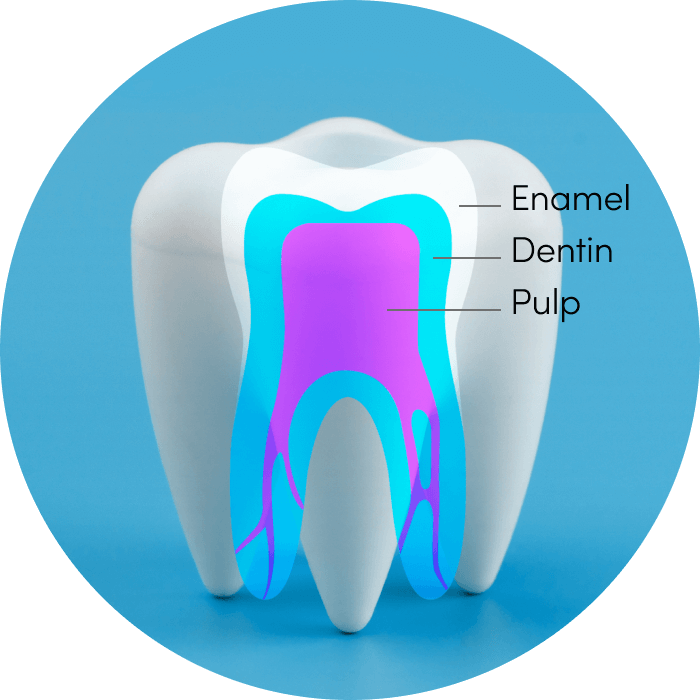
Inside your tooth, under the white enamel and dentin, is a soft tissue containing blood vessels, nerves and connective tissue called the pulp—and if this area becomes infected or inflamed, that’s when a root canal treatment is needed to clean and disinfect the inside of the tooth.*
If experiencing the signs of an infected root canal system, including pain, prolonged sensitivity to heat or cold, tenderness to touch and chewing, discoloration of the tooth and swelling, it’s time to schedule an appointment with your dentist right away as delaying treatment can lead to larger issues, such as an abscess tooth.*
Types of Root Canal Procedures
Root canal procedures are intended to remove the infected pulp from the tooth.* If the canals within the root canal system are not thoroughly cleaned and disinfected, they may become reinfected during your root canal recovery, which can then require a root canal retreatment.**
What Happens During the Root Canal Procedure
The exact process of your root canal treatment will differ depending on your specific condition, as well as the method of root canal therapy you choose.
Anesthesia Before the Procedure
Local anesthesia is typically used in preparation of a root canal procedure,† and your dentist or endodontist will numb the area near the tooth to make you more relaxed and at ease.†
Removing the Infected Pulp
Standard root canal treatment uses files to create the access cavity into the tooth, and the files are then used to manually clear the canals of the infected pulp, bacteria and debris.† Because of the complexities and hard-to-reach areas in the root canal anatomy, standard root canal treatment can leave behind infected tissue2 that can lead to reinfection.
Length of the Root Canal Process
How long a root canal procedure takes depends on the treatment option you choose. For standard root canal treatment, you can expect one or two appointments at about 90 minutes each.***
Root Canal Recovery
If you’re experiencing any mild discomfort during recovery, patients can manage it by taking an over-the-counter pain medication.† It’s important that patients avoid chewing on the tooth until all of the tenderness is gone, as this will help avoid recontamination of the interior of the tooth.†
An Effective Alternative to a Root Canal
While there are several types of root canal procedures with differing protocols and success rates, there is only one alternative to a root canal that forgoes traditional protocols to provide a better patient experience: the GentleWave® Procedure. While technically a root canal procedure, the GentleWave Procedure is a minimally invasive1 option that offers several benefits over traditional treatment.
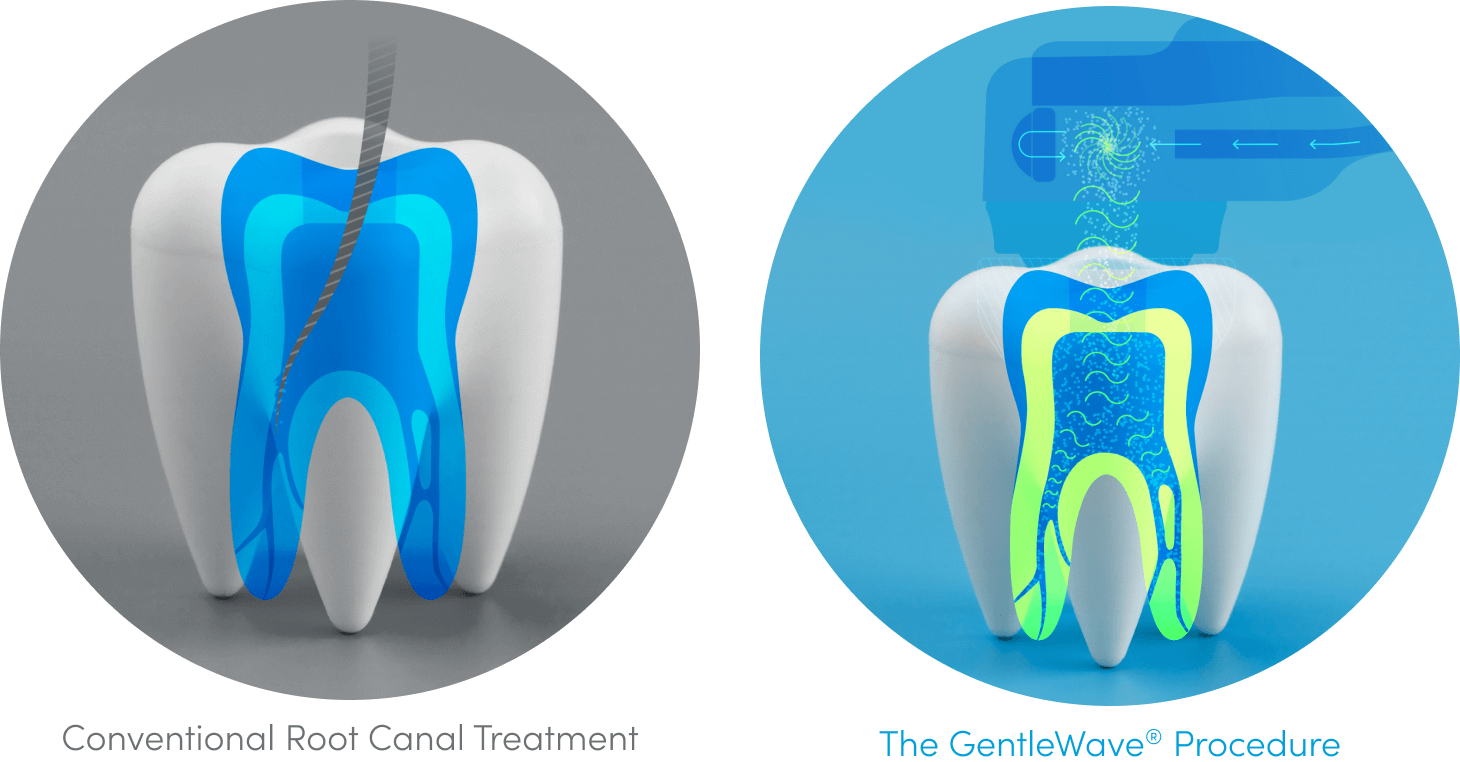
Rather than using files to remove infected tissue, which can in the process remove healthy tooth structure that can compromise the structure of the tooth, the GentleWave Procedure utilizes a scientific process called fluid dynamics to gently clean and disinfect the root canal system1,2—even reaching into the microscopic spaces1,2 that standard root canal treatments cannot access3. The result? Efficient cleaning of the root canal system1 that offers the chance for improved outcomes4 and fast healing4, plus preservation of the natural structure of the tooth4.
Choosing Your Root Canal Provider
 Are you interested in a revolutionary root canal treatment option that can help save your natural tooth? Use our Provider Locator today to find a GentleWave Provider near you!
* AAE
**AAE
*** MedicineNet
† WebMD